The date helps establish context
A dated report can help place the event you remember. Our storm history resource keeps reports at their recorded location and scope. A nearby hail or wind report does not establish damage on every roof in Edmond.
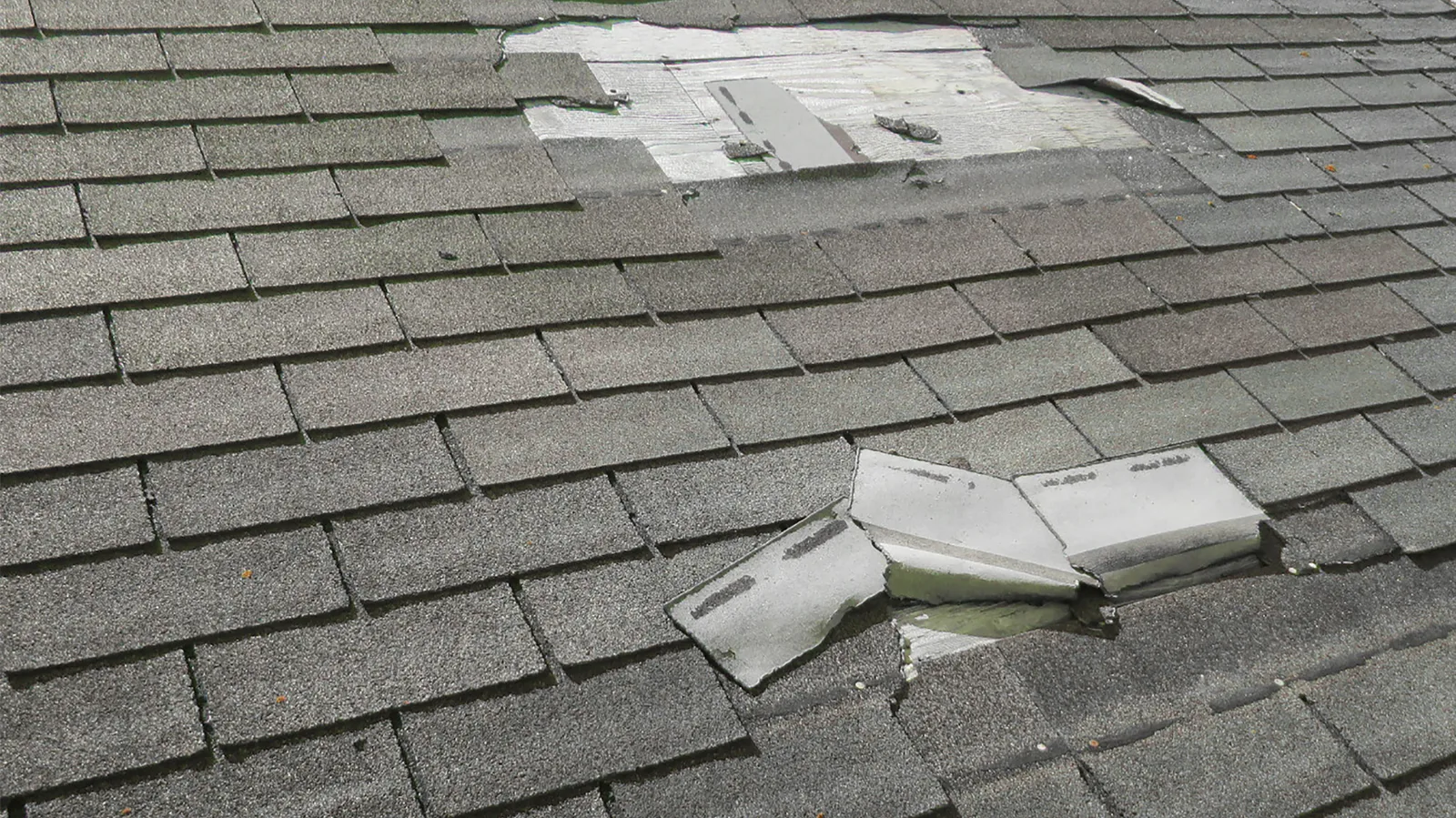
Missing roofing, a fallen limb or water inside calls for a closer look. Start with the damage you noticed and a free roof inspection.
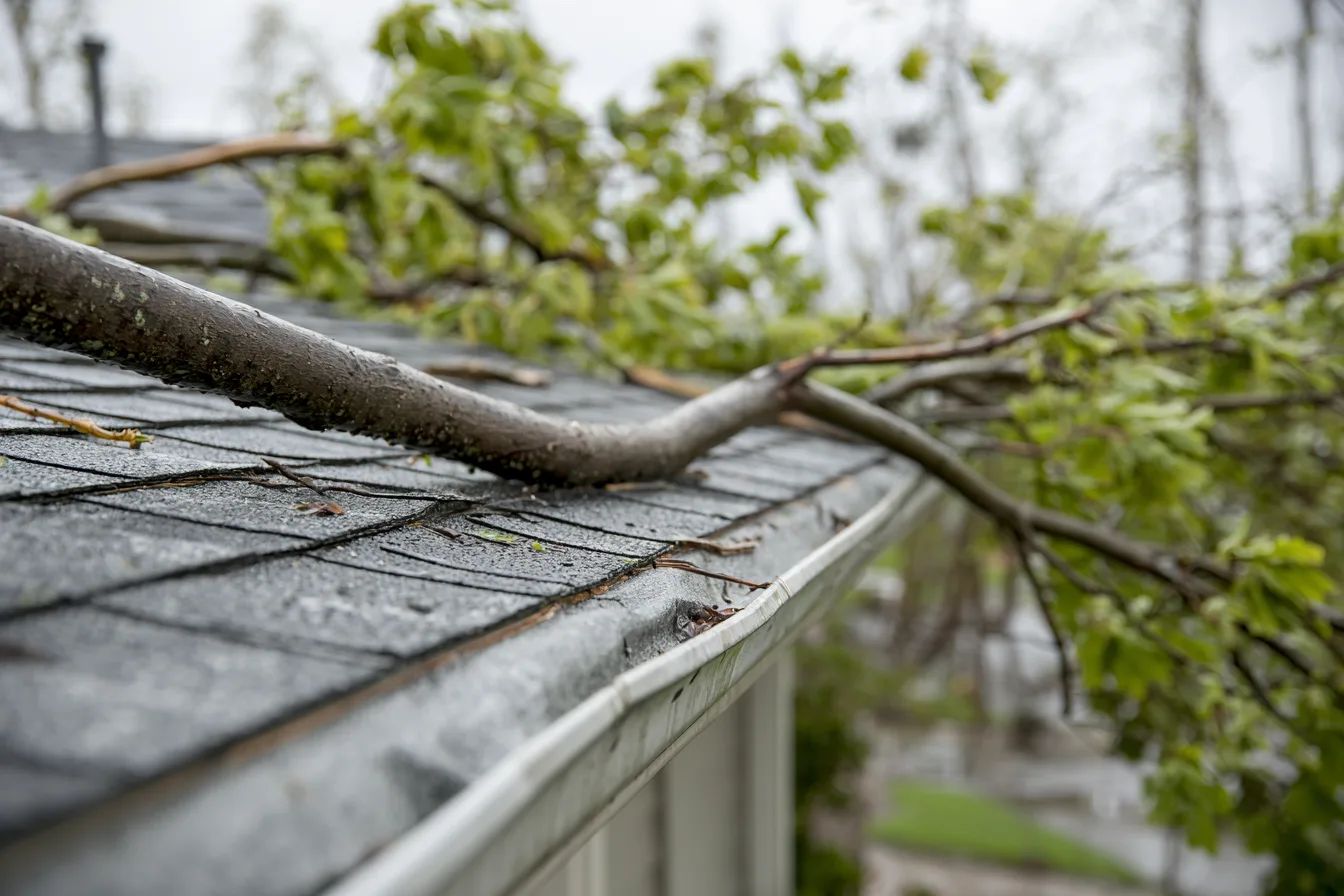
Wind can lift, crease or remove shingles and leave the protective layer below exposed. A branch can damage covering and support together. Rain entering through those openings adds a water problem to the visible roof damage.
We examine what has changed and the condition of the roof around it. The work might be a defined covering or flashing repair, a larger roof section or replacement where damage and deterioration extend farther. The storm date matters as context; the actual roof condition determines what needs to be rebuilt.
When impact damage is the concern, hail damage roofing explains the difference between a surface mark and damage to the roofing material. A close roof examination is more useful than deciding from the storm warning alone.
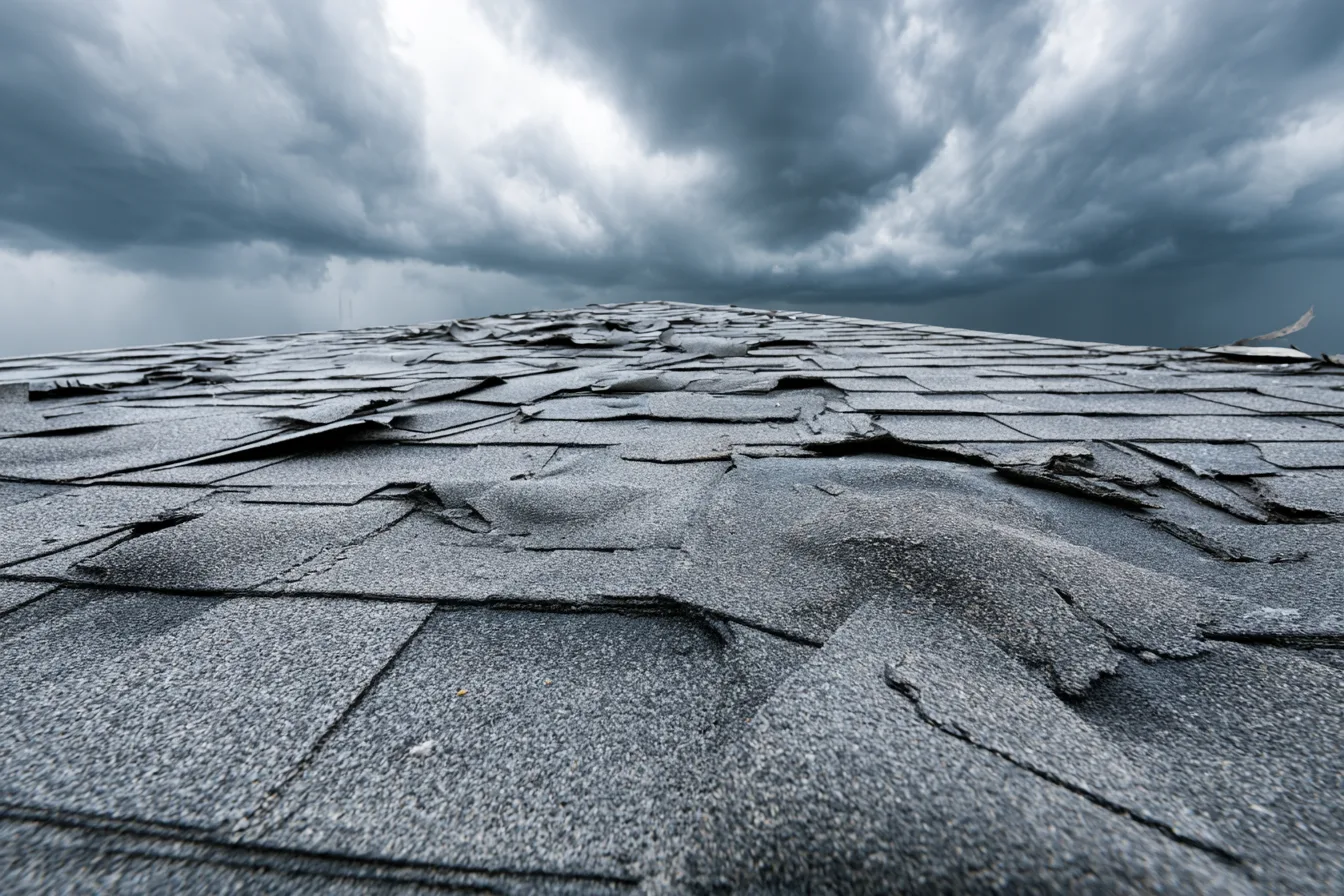
| Visible concern | What the roof needs examined |
|---|---|
| Shingles missing or folded back | The remaining courses, fasteners, underlayment and nearby edges, including whether new material can connect soundly. |
| Debris or a limb on the roof | Covering and support at the impact, with structural concerns kept separate from a simple shingle repair. |
| Loose metal or damaged roof openings | Flashing, boots, caps and their connections to the surrounding roofing. |
| Water in the building | Likely roof entry points and the path water has taken, along with any concealed damage exposed during work. |
| Dents after hail | The material and significance of the marks, rather than treating every dent as the same kind of roof failure. |
An unstable limb, damaged framing, downed power line or sagging ceiling needs safety attention before roofing work. Keep people away from those areas and use emergency services for an immediate hazard. A damaged roof is not a place for a homeowner to climb for a closer photograph.
Where the roof is open, temporary protection serves to limit further weather entry until permanent work can be completed. Its method and timing depend on the roof, weather and safe access. A tarp or temporary patch is not the same as rebuilding damaged roofing and supporting layers.
When you call, say if water is entering now or an area is exposed. You can describe what you saw from a safe location; the roofing examination handles the detail.
Immediate protection, permanent roof repair and any insurance claim are connected decisions with different jobs.
The roof examination considers damaged covering, connections and support, including how the affected area meets serviceable roofing. Earlier wear or an old patch can affect the repair even when a storm prompted the visit.
The repair needs compatible covering, sound fastening support and rebuilt water-shedding details. Damaged decking or structural members adds a different scope from replacing missing tabs. Interior water repairs are also distinct from closing the roof.
The insurer decides coverage under the policy. Cause, deductible, valuation and payment conditions affect what it pays; a roof replacement is not automatically covered because a storm occurred. The roof insurance guide explains the terms and payment stages.
A dated report can help place the event you remember. Our storm history resource keeps reports at their recorded location and scope. A nearby hail or wind report does not establish damage on every roof in Edmond.
Repair size, access, compatible material and the condition of exposed layers shape cost. A limited loss of workable shingles differs from damage across a slope or an opening through the deck. The actual repair boundary matters more than a generic storm price.
Coverage, deductible and any depreciation or roof payment schedule affect the owner's share. Temporary protection receipts and the condition before permanent work can matter to a claim, but the specific policy and insurer determine requirements.
No. A local repair is possible when compatible material can join workable surrounding shingles and sound underlying layers. Wider damage, brittle covering or deteriorated support changes the work. The roof needs examination before that choice is made.
Yes. The inspection is free, and a roofer walks the roof to examine its condition. A roofing inspection and an insurance claim are separate steps; the insurer applies the policy to any reported loss.
No. Temporary protection covers an exposed area while permanent work is arranged. The damaged covering, flashing and any affected support still need the appropriate repair or replacement. Safe access and weather affect what can be done.
Some roof details are hard to see from below. A close inspection can examine covering, caps, flashings and openings that are out of view from the ground. A report or warning alone still cannot establish what happened on your property.
The amount and type of damage, access, damaged supporting layers and ability to join existing material affect the work. A tree impact through the deck needs a different scope from an isolated missing-shingle repair.
Start with the property location and what you noticed after the storm. If water is entering or roofing is exposed, say that first.
(405) 705-7117