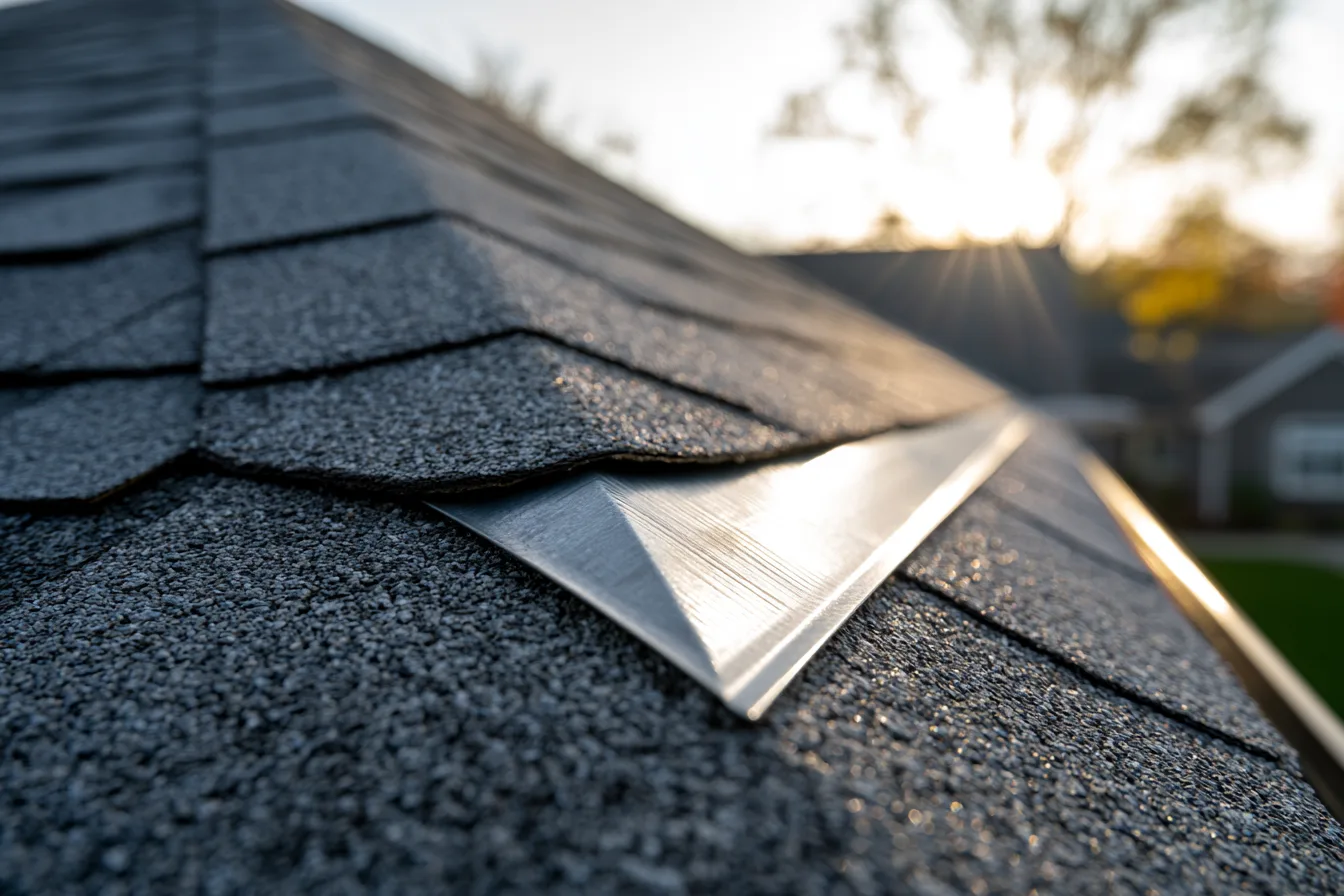
A sound detail with a limited defect
A compatible repair can address a defined joint or damaged component where surrounding material is sound. Product instructions determine where sealant belongs and which surfaces it can join.
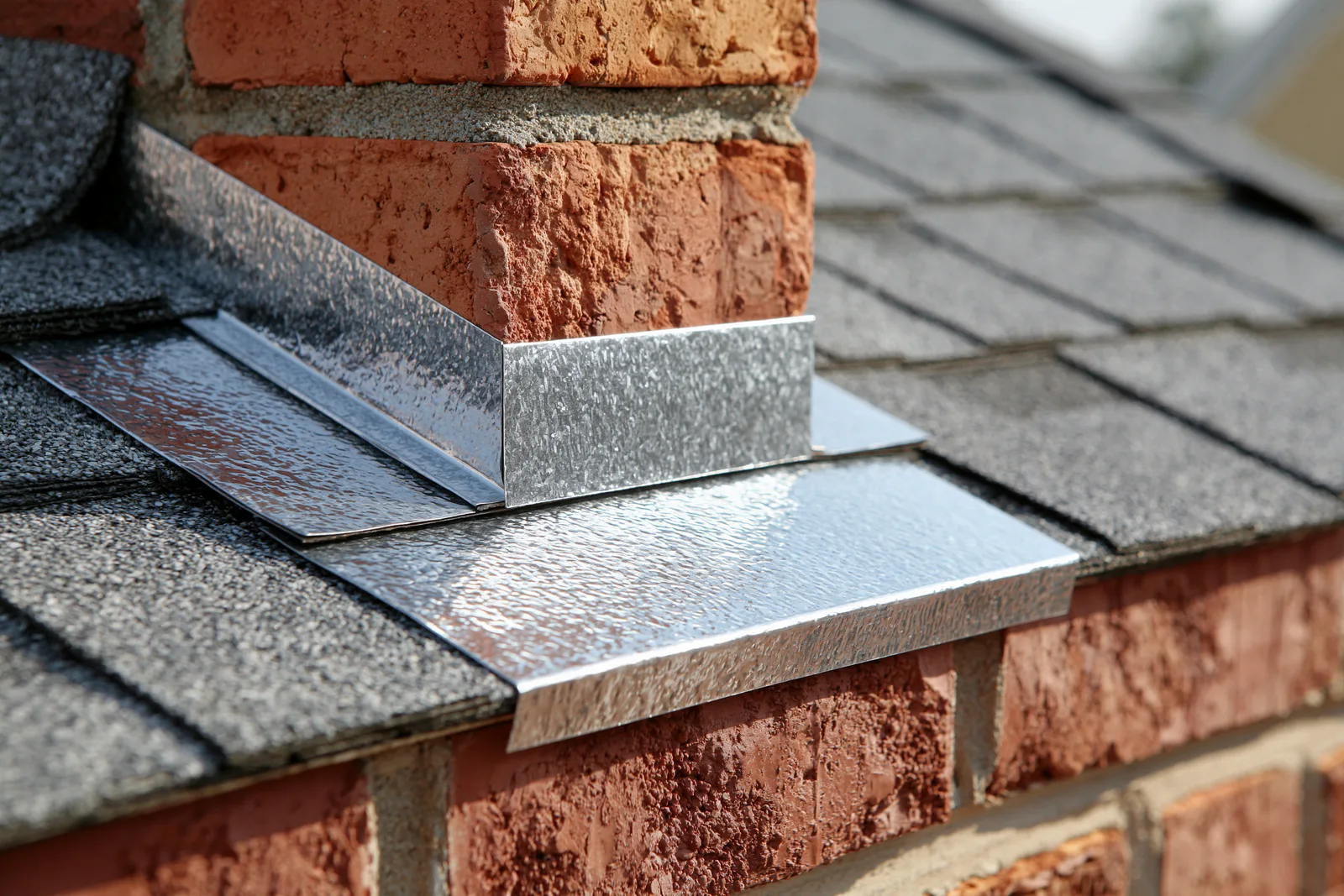
The joints around a wall, chimney or roof opening have to shed water with the shingles. A lasting repair restores that connection.
Flashing is the thin protective material used where a continuous roof covering is interrupted. It directs water past the joint rather than asking a bead of sealant to hold back every shower. The covering and flashing have to overlap in the direction water should travel.
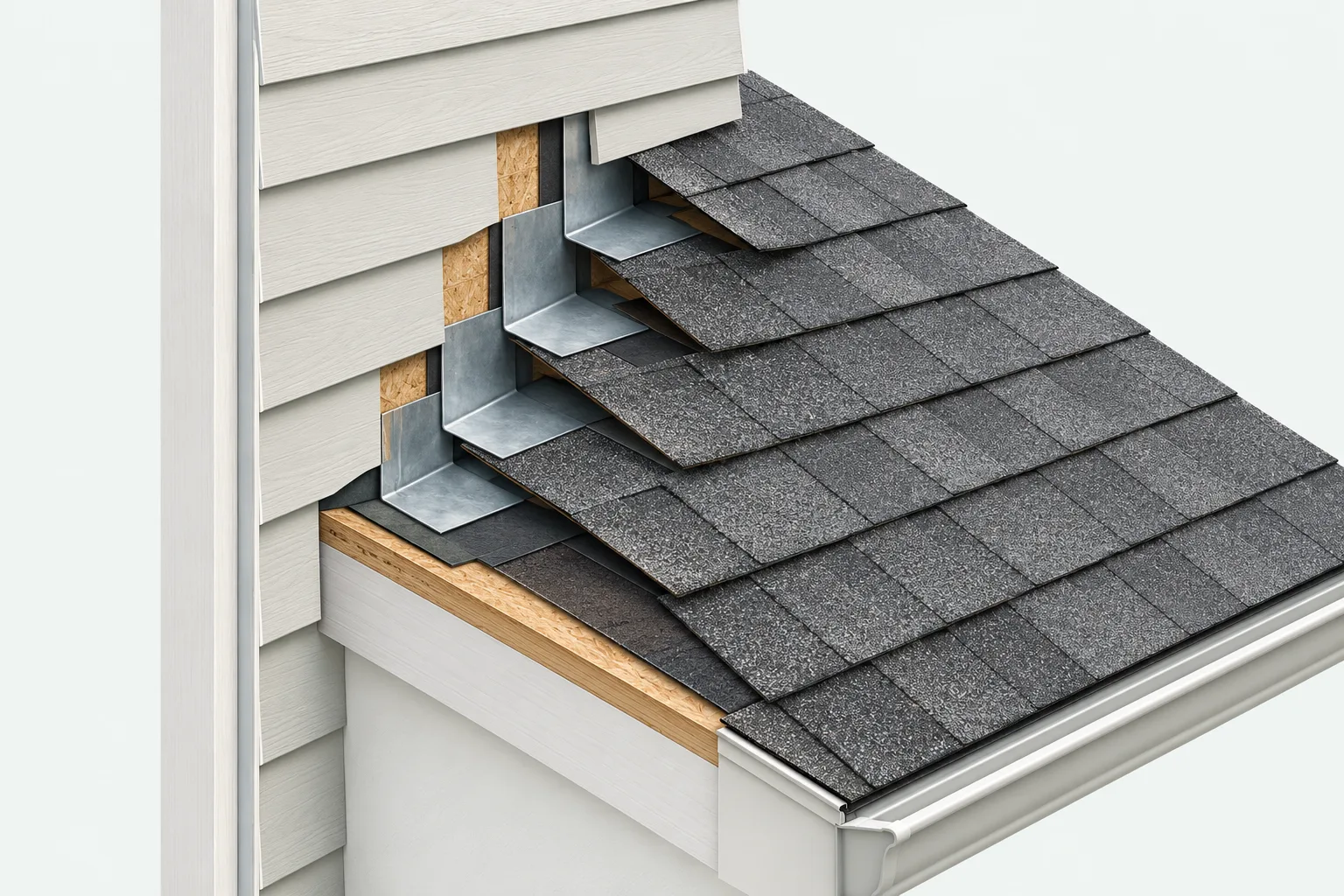
We examine the joint and the material surrounding it. Loose metal, a damaged pipe collar or a missing connection behind a wall can produce similar leaks indoors but need different repairs. The work has to reach the failed detail, even where that means opening adjoining roofing or coordinating work at the wall.
A stain does not identify which joint failed. If the entry is uncertain, roof leak repair starts with the water path before deciding which flashing needs work.
| Detail | How it sheds water | What repair addresses |
|---|---|---|
| Step flashing at a sidewall | Individual overlapping pieces work with the shingle courses beside a wall. | Damaged pieces, incorrect laps and the connection behind the wall covering. |
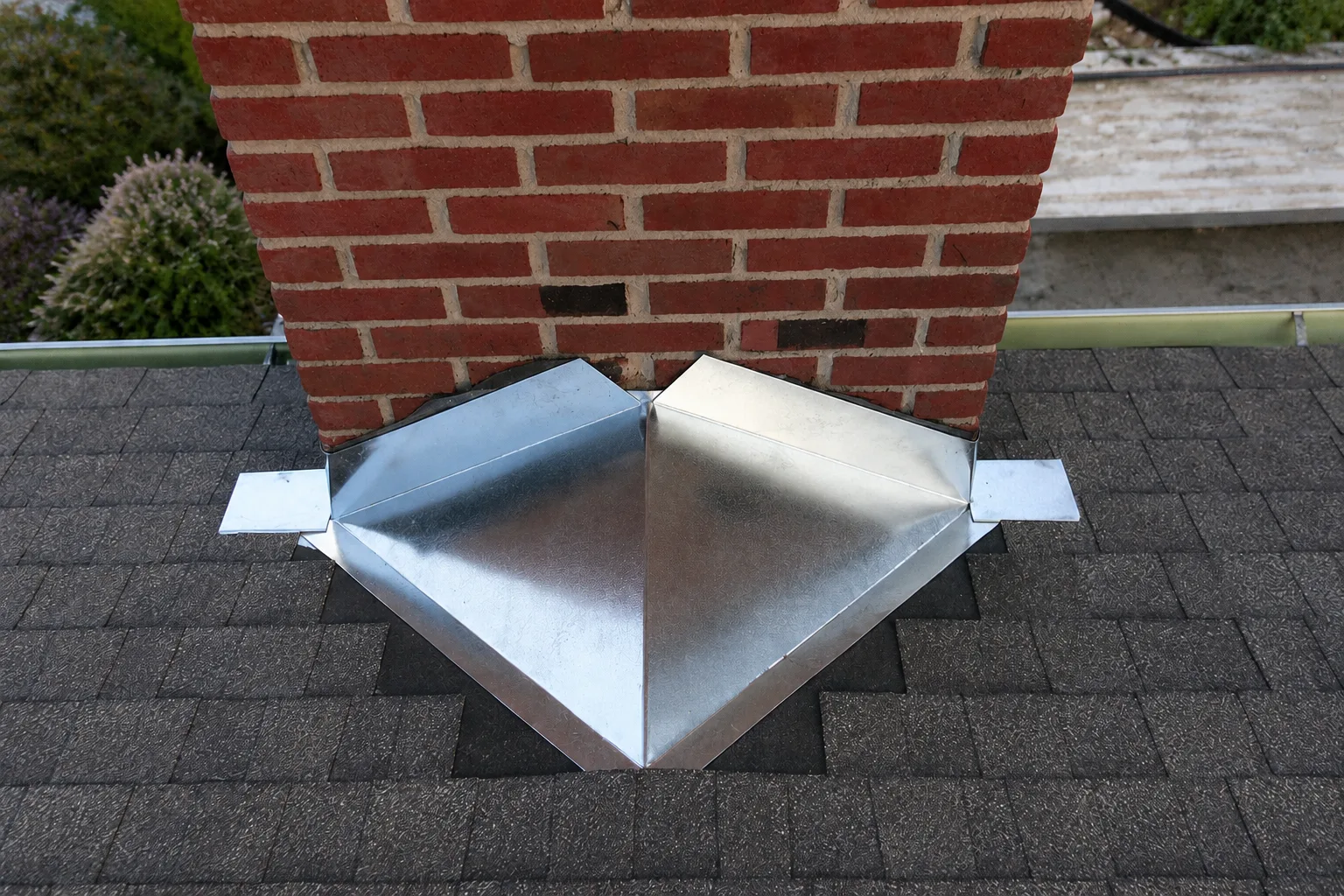
| Chimney base and counterflashing | Base flashing joins the roof; counterflashing protects its upper edge at the masonry. | The roof-side metal and its protected connection, with masonry defects assessed separately. |
| Valley flashing | A valley carries water where two slopes meet. | Damaged metal or lining, the covering beside it and the supported route to the eave. |
| Pipe boot | A collar seals around the pipe while its base joins the covering. | A split collar, damaged base or poor connection to nearby roofing. |
| Drip edge and roof edges | Edge metal directs water away from exposed roof-deck edges. | Loose or damaged metal and its relationship to underlayment and the gutter. |
The right repair depends on the detail and the condition of its layers. A visible gap is not always the full problem.
A compatible repair can address a defined joint or damaged component where surrounding material is sound. Product instructions determine where sealant belongs and which surfaces it can join.
Flashing needs to be fitted into the roofing and protected at its upper edge. Repeatedly covering missing laps or loose metal with sealant leaves the physical water-shedding detail unresolved.
Deteriorated decking, wall sheathing or masonry can widen the work. The roof repair needs a sound place to connect, with wall or chimney repairs coordinated where those materials are part of the failure.
A chimney blocks water moving down the roof and creates several joints at once. The upslope side, sidewalls and lower apron have different water paths. Where the roof design calls for a cricket, that small peaked structure divides water around the chimney instead of letting it collect behind it.
The flashing at the roof is separate from the chimney crown, cap and masonry. A crack higher in the chimney can admit water even when the roof-side metal is sound. Identifying that distinction prevents a roofing patch from being asked to solve a masonry defect.
Repair scope and cost depend on access, the metal configuration, how much adjoining covering must be opened and whether sound support remains. During replacement, existing flashing is assessed for condition and compatibility rather than assumed reusable.
The roof surface, upper protection and adjoining wall or chimney are considered together. An old sealant patch can conceal how the original metal was fitted.
Shingles or adjoining finishes may need to be opened to repair the overlap. Workable material and sound support establish the repair boundary, rather than the amount of metal visible from outside.
The new or repaired detail ties into the roof above, beside and below it. Appropriate underlayment and compatible fasteners and sealants complete the connection. Finish repairs at masonry or siding belong in the scope when needed.
Yes, where the damaged detail is accessible and the repair can connect to workable surrounding covering and sound support. Brittle shingles or deterioration beneath the joint can require a larger area to be opened.
Sealant can weather or separate, and it cannot replace a missing lap or improperly connected flashing. If the underlying water path was never corrected, rain can continue entering beneath or beside the patch.
Yes. A plumbing vent pipe passes through the roof and its boot seals around that pipe. An attic vent moves air from the roof space. Both need watertight roof connections, but they perform different jobs.
The actual detail, condition and compatibility determine what should be retained or replaced. Damaged, unsuitable or poorly connected flashing needs correction; new shingles alone do not resolve it. Manufacturer requirements also govern the selected roof system.
Height, steepness, difficult access, the amount of roofing or wall finish that must be opened and any deteriorated support affect the work. A complex chimney connection differs from a defined pipe-boot replacement.
Tell us where you noticed water or a loose roofing detail. Start with a free roof inspection to work out which connection needs attention.
(405) 705-7117