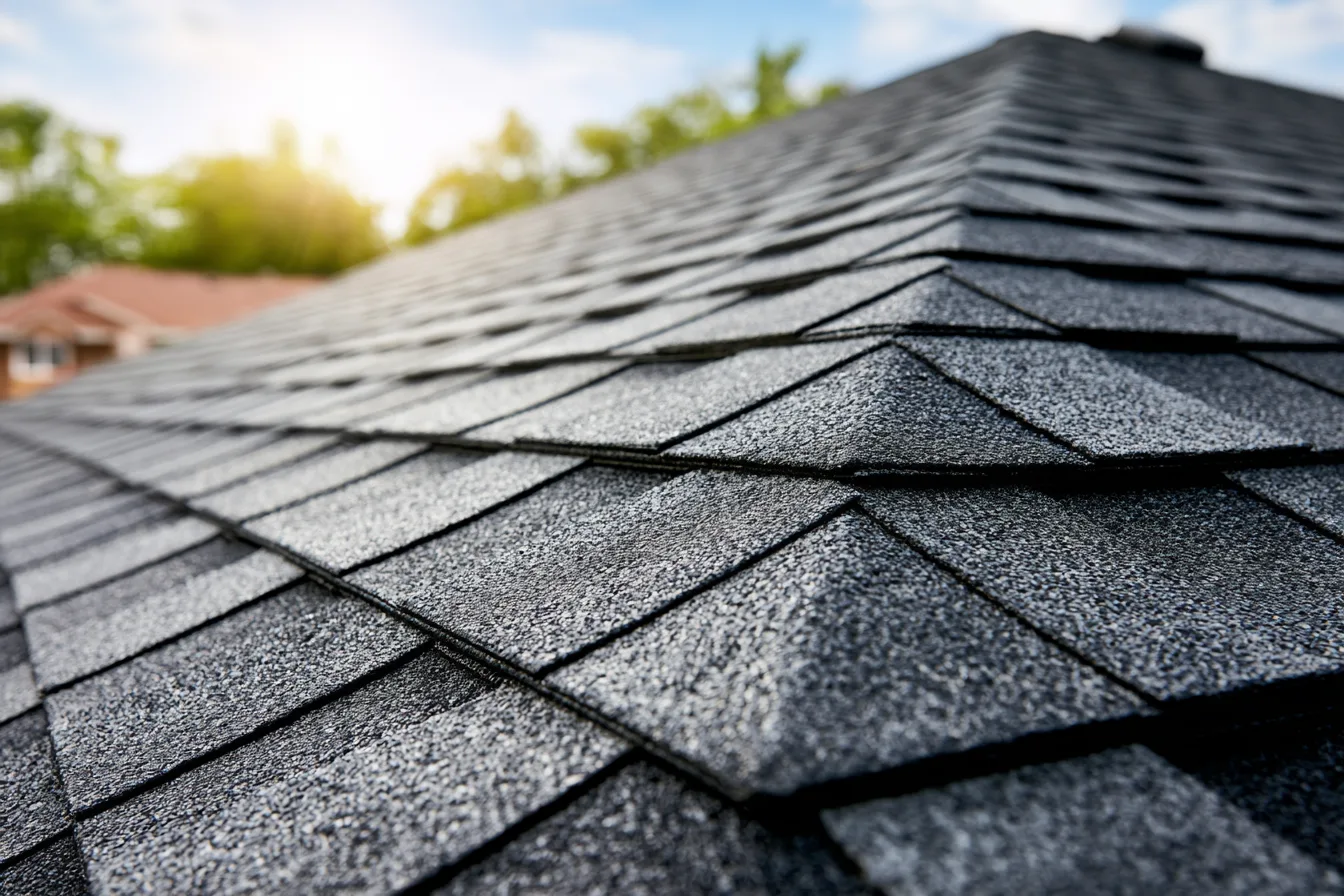
Damaged or missing shingles
The roofer replaces the affected covering and restores its fastening and overlapping courses. Missing shingles also expose the layer below, so the work includes checking for damage that the missing tab no longer hides.
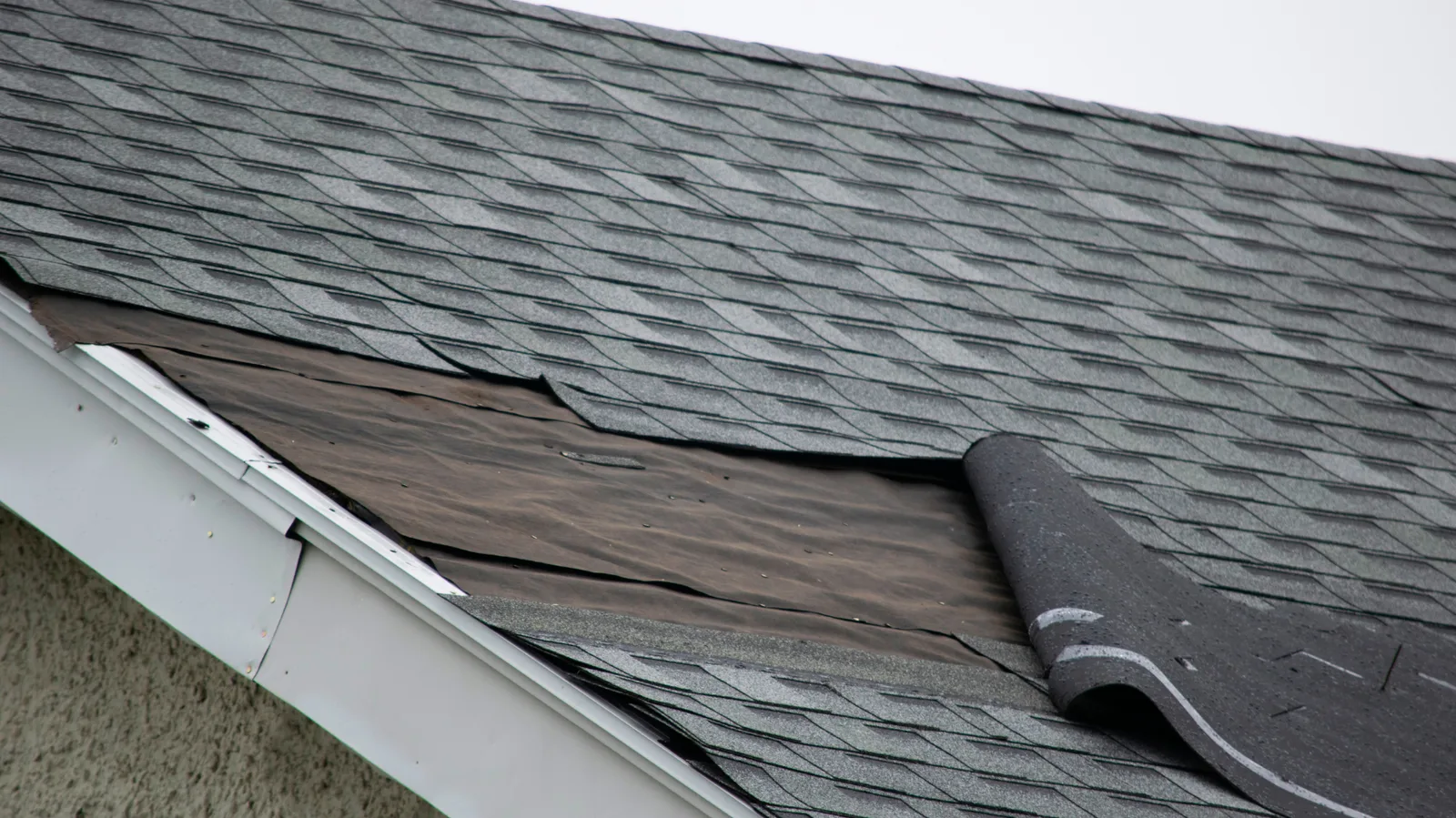
A few missing shingles or a failed roof detail needs a close look at the surrounding roof. We help you understand how far the repair needs to go.
A patch only works as part of the roof around it. Replacement shingles need to fit the existing covering, and nearby shingles must be workable enough to open and reconnect. Beneath them, the support and protective layers need a sound place to join.
We examine the damaged area and the roof it meets. A small opening in otherwise serviceable roofing can have a local repair path. Split wood, deteriorated underlayment or brittle adjoining shingles widen the work. The repair boundary follows those findings, rather than the size of the mark visible from the yard.
For an interior leak, the route water takes matters too. Our roof leak repair service focuses on locating the entry and checking the roofing along that path.
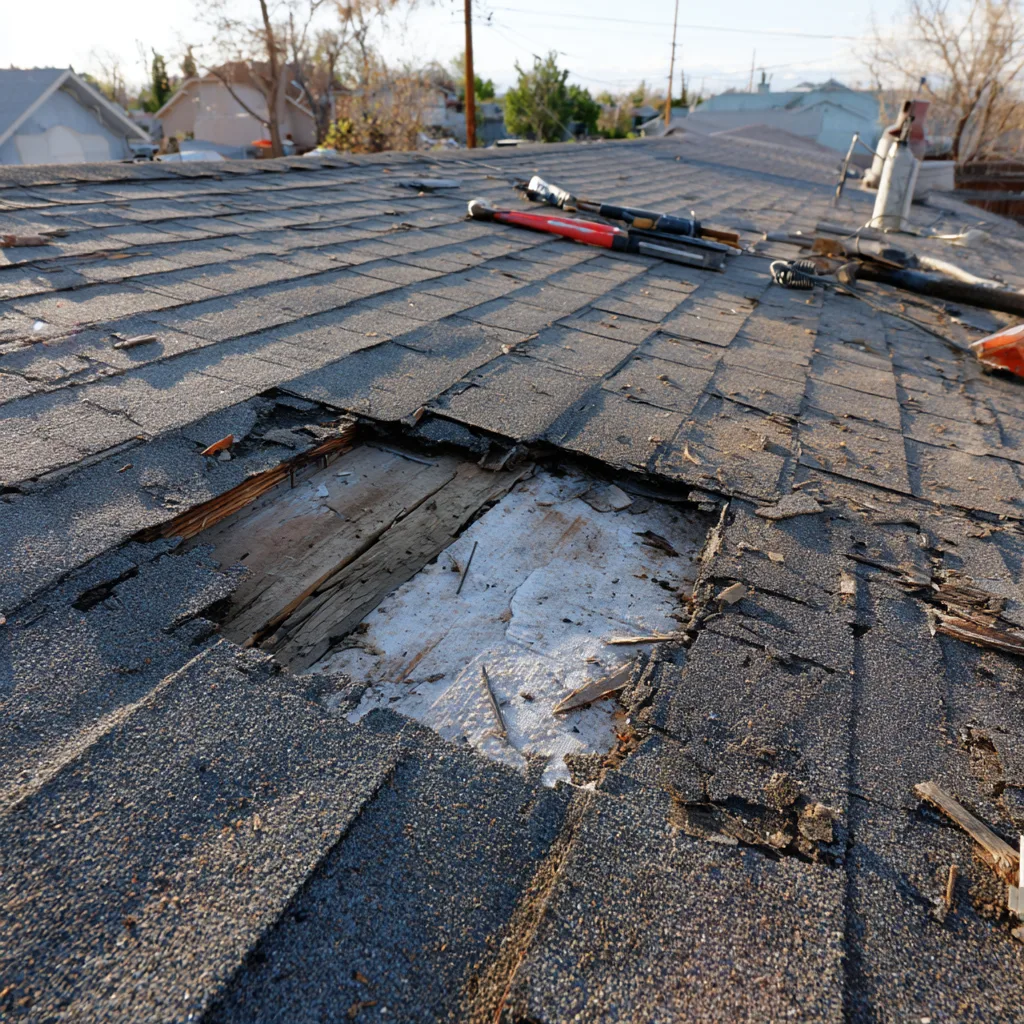
The roofer replaces the affected covering and restores its fastening and overlapping courses. Missing shingles also expose the layer below, so the work includes checking for damage that the missing tab no longer hides.
Metal flashing and pipe boots direct water around interruptions in the roof. A loose wall connection, failed collar or damaged valley needs the matching detail repaired. Flashing repair explains those connections and why surface sealant alone has limits.
Wood that has softened or deteriorated cannot provide the same fastening support as sound decking. Repairing that area means opening enough roofing to replace the unsound support and rebuild the layers above it.
The visible problem starts the inspection. The condition around it determines the physical work.
We examine the covering, nearby joints and signs of water entry. If an earlier patch is present, its edges and connection to the original roof matter as much as the patch itself.
The repair reaches sound material. Matching a color is useful, but the material type, thickness, fastening and ability to reconnect the courses also matter. A perfect cosmetic match is not always possible on weathered or discontinued shingles.
The work addresses the failed part and affected supporting layers. That can mean replacing a boot or flashing detail, replacing shingles, repairing decking or rebuilding a combination of those parts. Temporary weather protection and permanent repair serve different purposes.
Repair cost follows access, the failed detail and how much roofing must be opened and rebuilt. A small stain can come from a complicated joint; a larger visible shingle patch can be simpler to reach.
| Finding | Effect on the work |
|---|---|
| Isolated covering damage | A defined repair area with serviceable adjacent shingles limits how much roof must be disturbed. |
| Wall, chimney or valley connection | Rebuilding overlapping flashing and connecting it behind adjoining materials adds detail work. |
| Wet or deteriorated decking | The roof needs to be opened far enough to replace unsound wood and restore the covering. |
| Steep, high or obstructed access | Safe access, staging and material handling change the labor required. |
| Widespread loss of repairable material | A larger section or replacement becomes a useful comparison when repeated local work cannot connect reliably. |
Yes, when compatible material is available, the adjoining shingles are workable and the repair can connect to sound deck, underlayment and flashing. If opening the area breaks the surrounding roofing or reveals wider deterioration, the work needs a larger boundary.
Replacement shingles can differ in shade from roofing that has weathered. Product availability and the existing profile affect the match. A sound water-shedding repair comes first; appearance remains a real material choice to discuss with the work.
Sealant has a role in certain details, but it does not replace missing or poorly connected flashing. A repair needs to correct the water path and the damaged connection. Repeatedly covering an opening without rebuilding it can leave the original failure beneath the patch.
Concealed deterioration changes the work needed to support and connect the repair. The affected wood or underlayment must be addressed before new covering goes over it. The extent of that deterioration determines whether the original local repair is still appropriate.
Yes. Request a free roof inspection and tell us what you noticed. A roofer walks the roof to examine its condition and help work out the appropriate next step.
Start with the part that concerns you: missing shingles, a loose roof detail or water inside. We can take a closer look with a free inspection.
(405) 705-7117