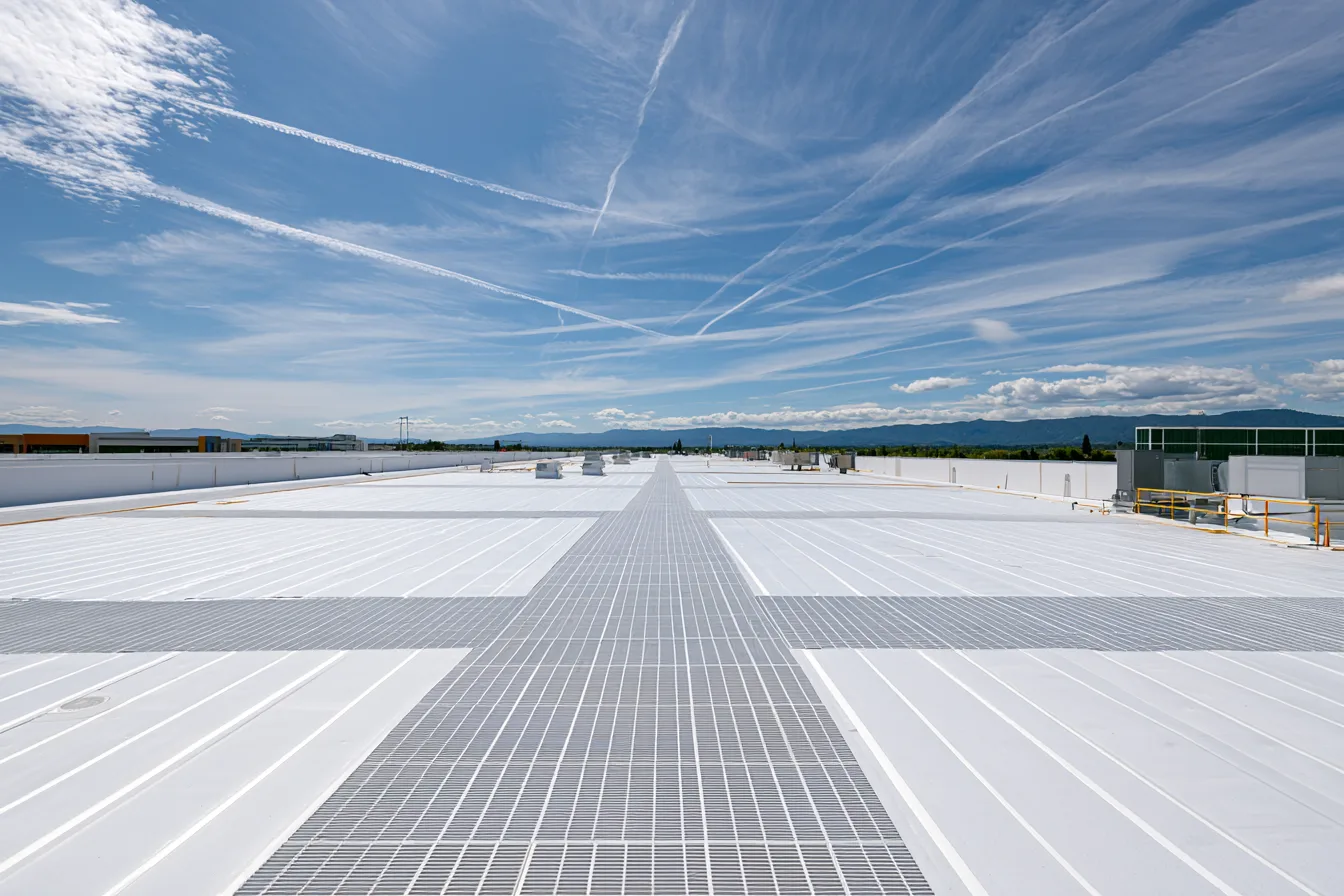
Flat Roof Repair
Find the failed membrane, curb or drain connection and establish how far the repair must reach into sound, dry roofing.
Explore this service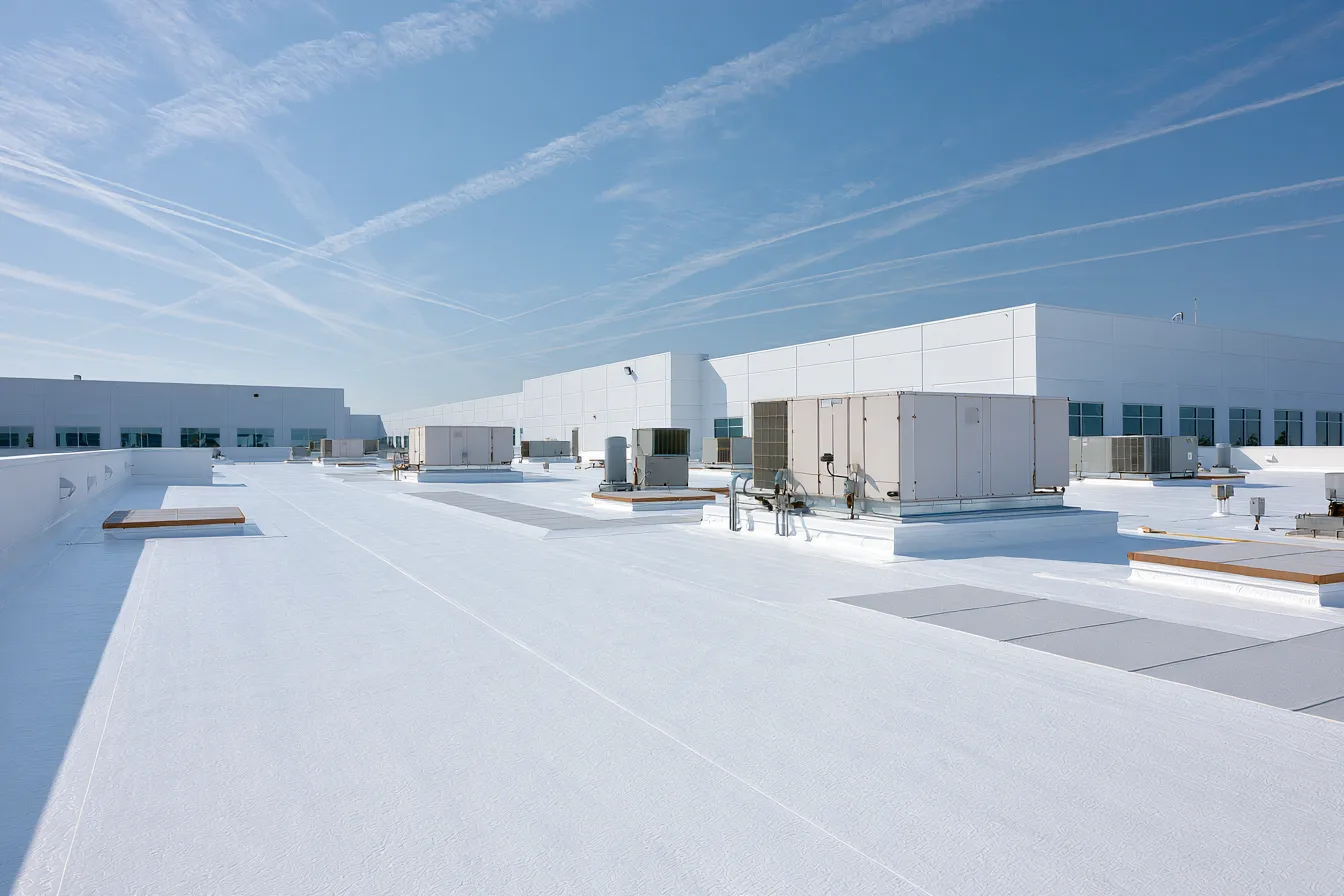
Keep the building's roof, drainage and day-to-day use in the same plan. Start with a free roof inspection.
An active leak, worn membrane and poorly draining roof raise different work questions. The existing roof system is the starting point, with the condition of insulation, decking and drainage deciding how much of it can stay.
Use the system pages below for the work relevant to your building. A roof inspection brings the surface, seams, edges and openings into the same examination before repair, restoration or replacement is chosen.
Find the failed membrane, curb or drain connection and establish how far the repair must reach into sound, dry roofing.
Explore this service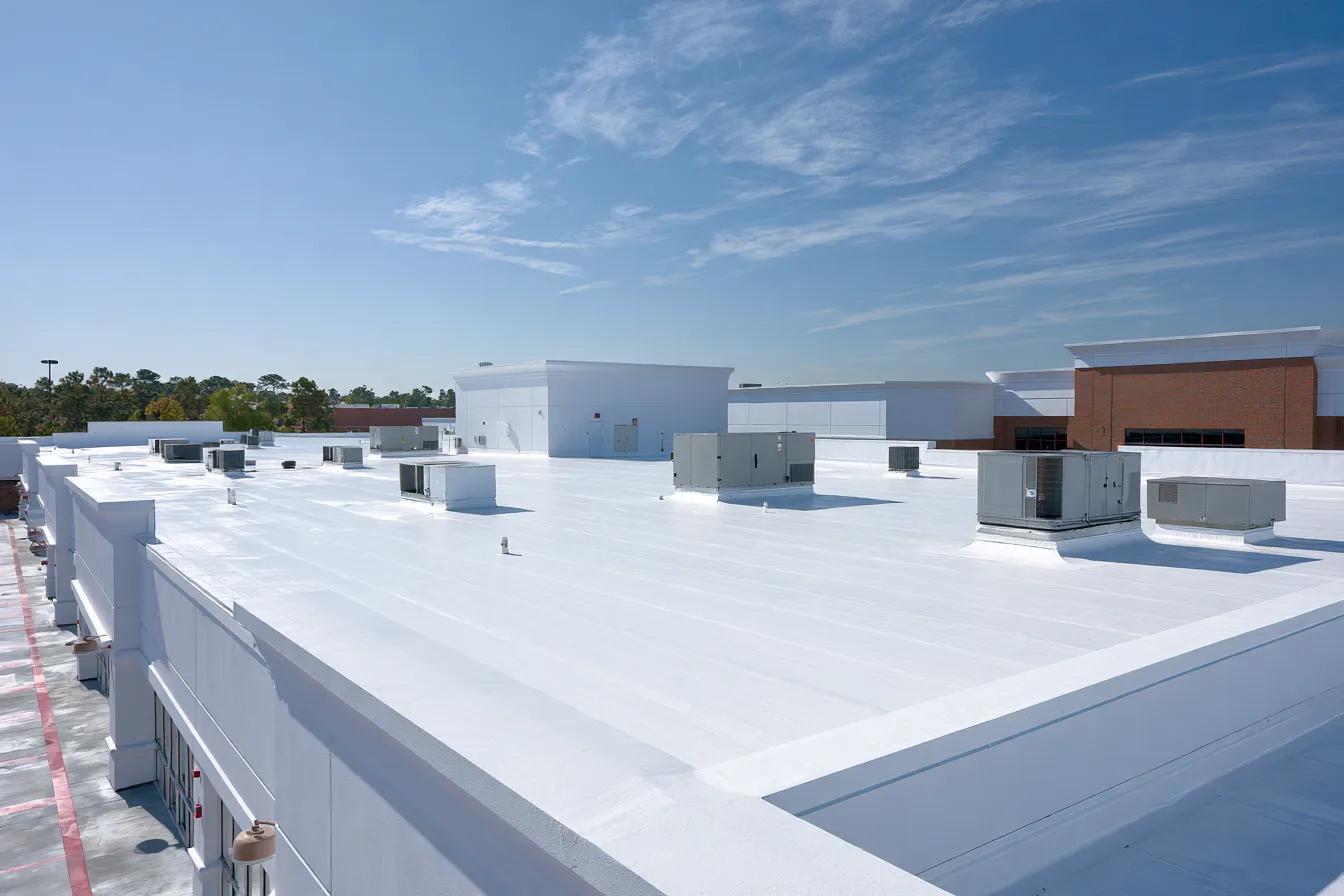
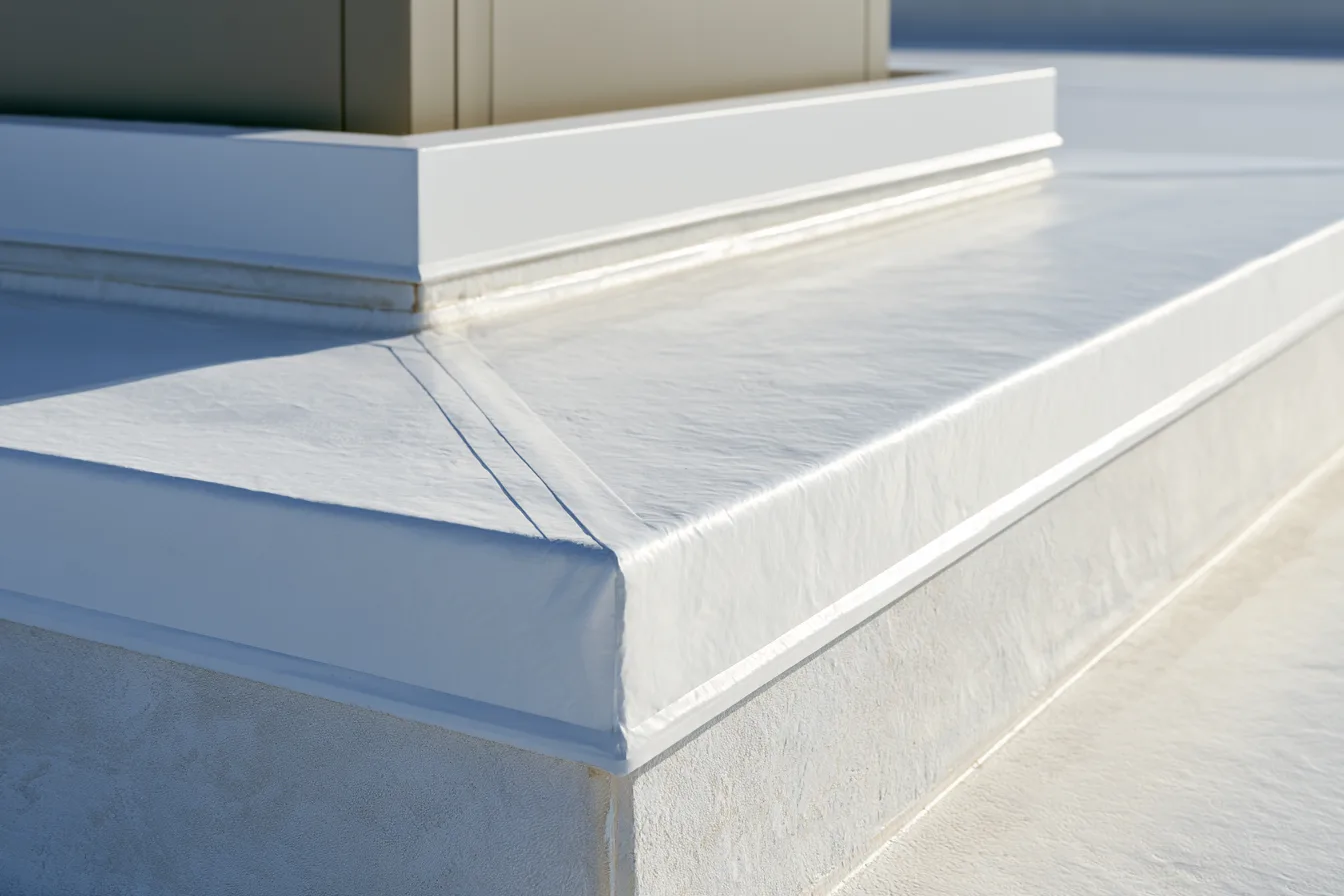
Heat-welded seams, roof edges and equipment penetrations matter as much as the white membrane between them.
Explore this service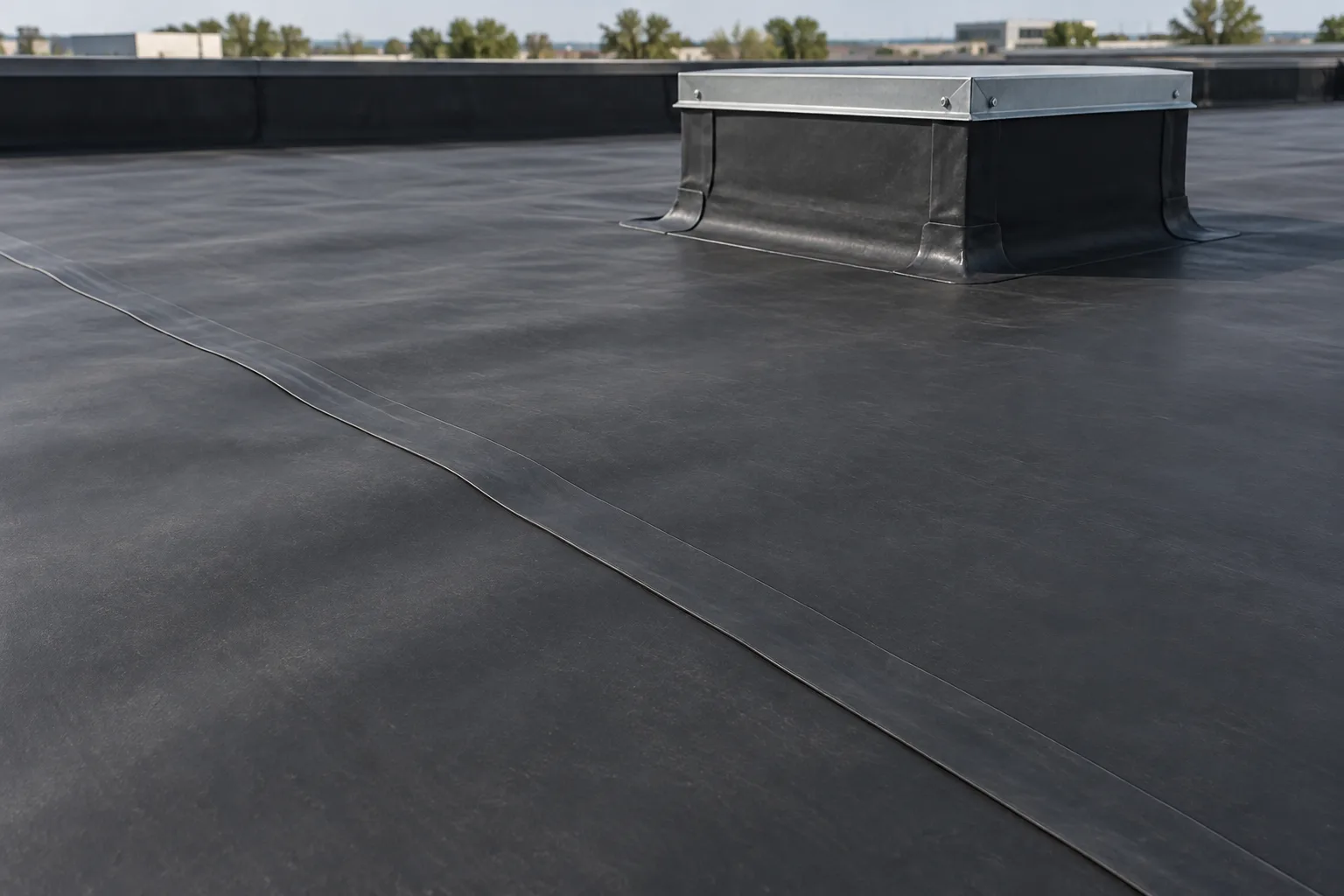
Rubber membrane needs compatible seams, flashing and repair materials, with underlying condition guiding the work.
Explore this service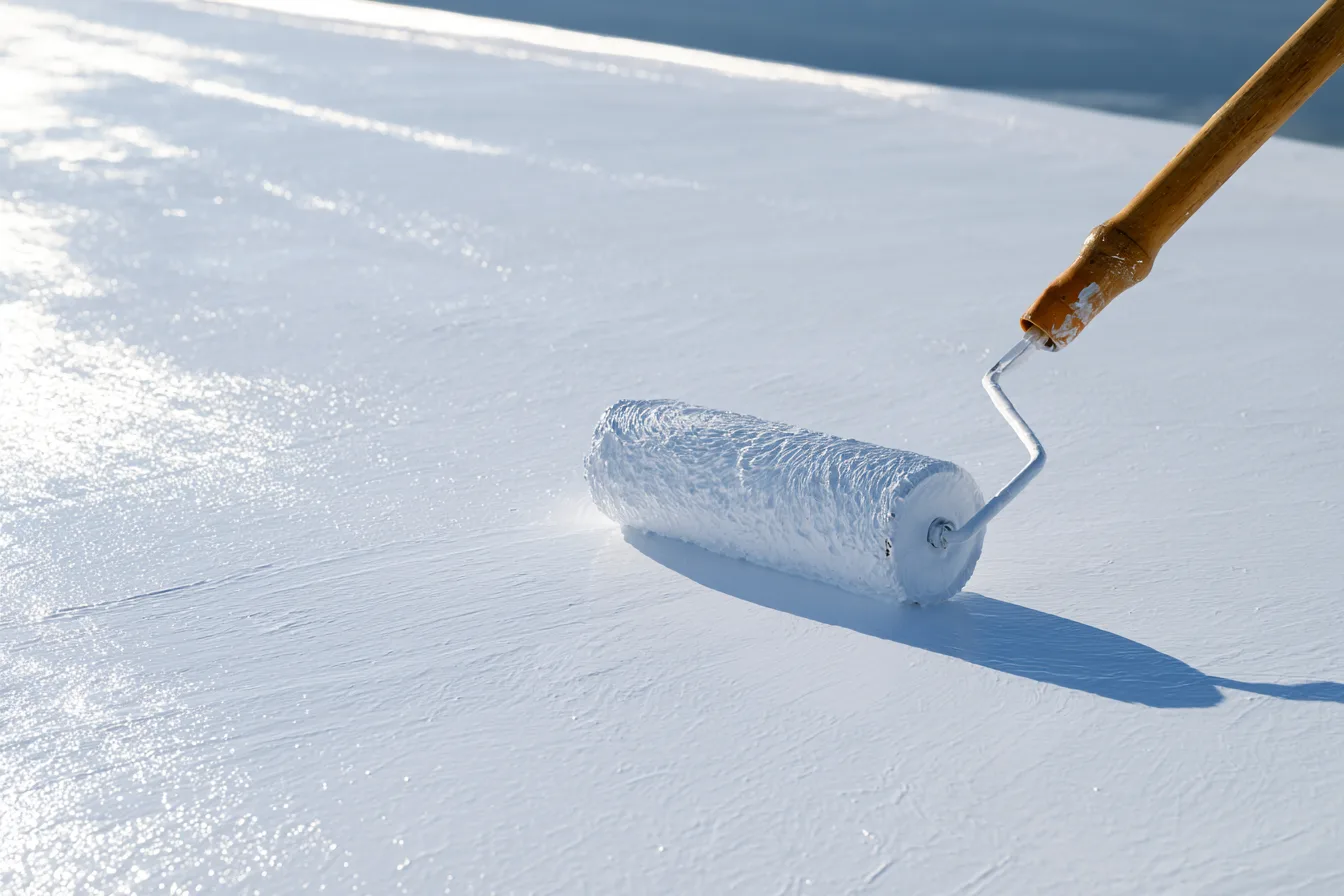
Restoration begins with a suitable roof, compatible coating and repairs. A new coating cannot dry insulation trapped below it.
Explore this service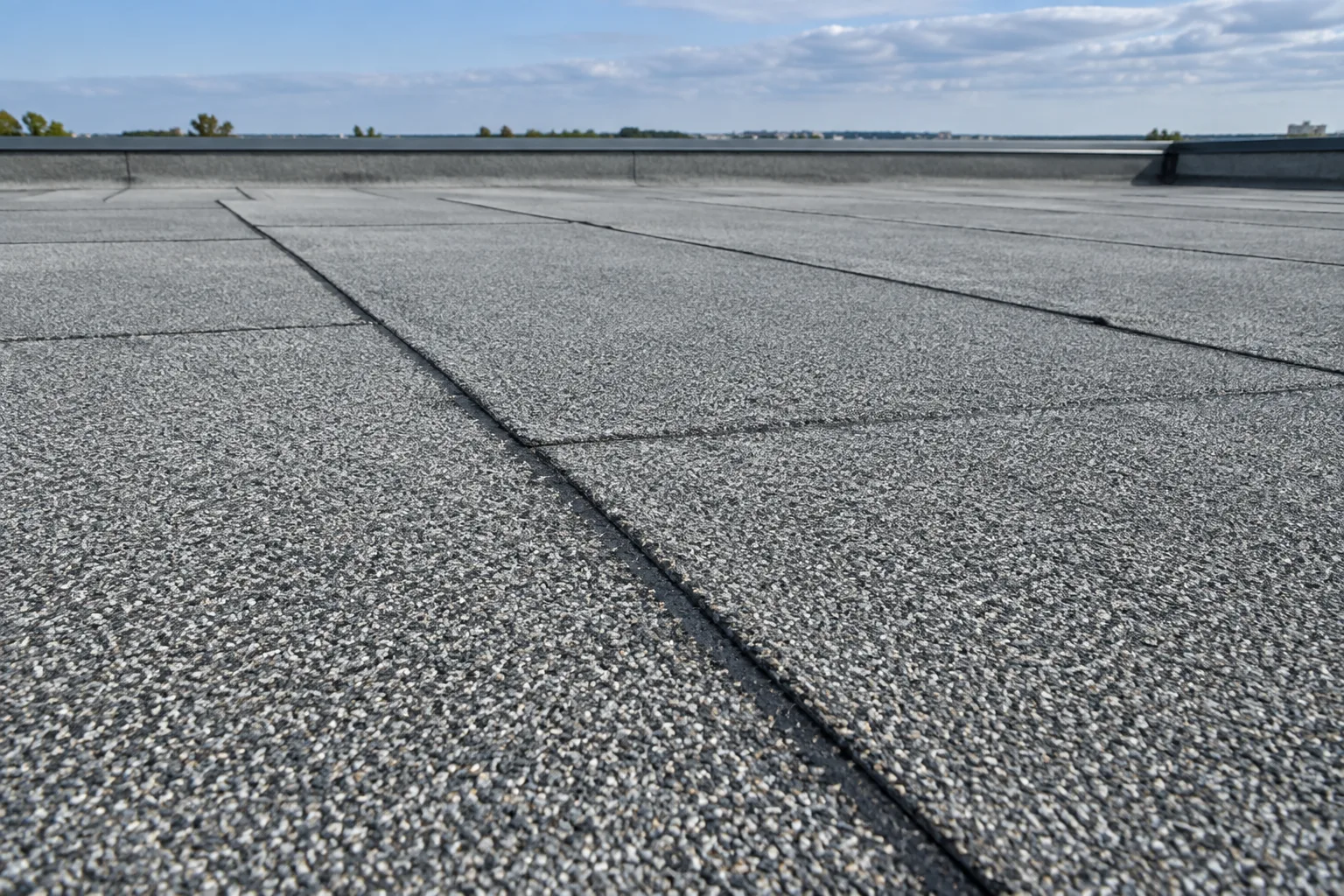
Asphaltic roof sheets need sound laps, surfacing and flashing. The system determines the application and repair method.
Explore this service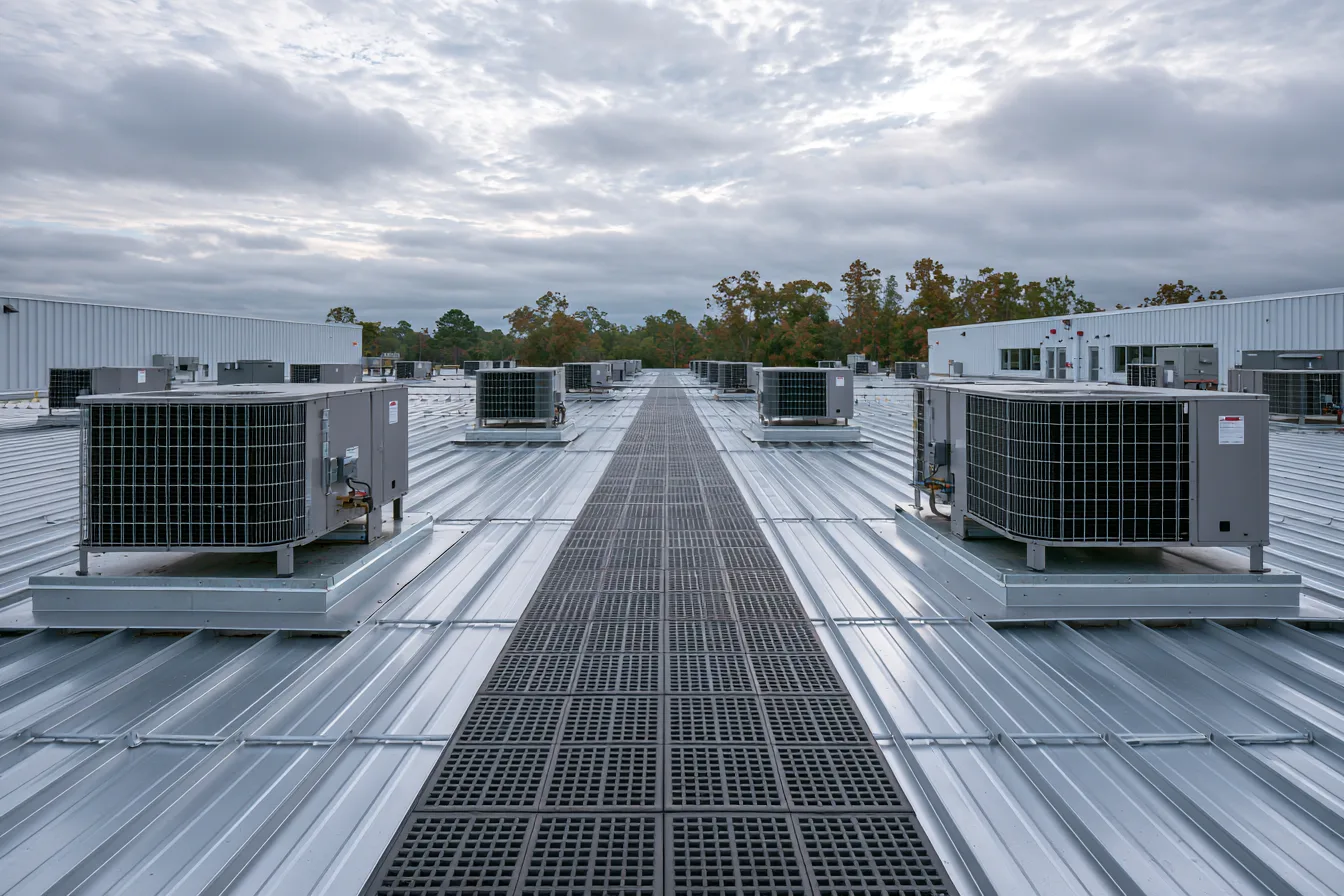
Panels, fasteners and moving joints need a connected approach, including details around rooftop equipment.
Explore this serviceRain has to travel across the roof and leave through drains, scuppers or gutters. The drain opening is only one part of that route. Low areas, obstructed outlets and poorly connected flashing can keep water where the roof was meant to shed it.
We examine the membrane along with penetrations, equipment curbs, perimeter edges and the drainage route. An opening at a curb calls for a different repair from a deteriorated roof area holding moisture underneath. Repairing a leak without accounting for that distinction can leave the next roof decision unresolved.
Where insulation is wet or supporting layers have deteriorated, new surface material alone does not restore the assembly. The affected layers need to be addressed before a coating, recover or new roof is put over them.
The useful question is how much serviceable roofing remains, and whether the proposed work can connect to it. These are different ways to address a building, rather than steps every roof has to go through.
A sound surrounding membrane and dry, supported connections can allow a local repair. The work targets the actual opening and damaged layers, using materials compatible with the existing system. Repeated patches need a fresh look at the cause and repair boundary.
Coating requires preparation, compatible material, adhesion and detail repairs. A recover adds a new roof assembly over suitable existing layers. Both depend on existing condition, moisture findings, drainage and applicable code; they are not interchangeable surface treatments.
Widespread wet insulation, deteriorated substrate or a roof that will not accept reliable repairs can make removal and replacement the appropriate scope. Replacement also allows underlying drainage and assembly needs to be addressed as part of the new system.
A roof protects occupied space and shares access with the people who use the building. Those operations belong in the work plan.
Tell us the building location, the existing roof type if known and where the problem is affecting operations. Water over occupied rooms, equipment or stock needs to be identified at the start. A roofer carries out the closer roof examination.
Material staging, tenant entrances, delivery routes and HVAC access affect how the work is arranged. Equipment curbs and penetrations need roofing details that fit their use; equipment relocation or servicing involves the appropriate trades.
A local repair can address a defined defect while replacement planning continues. Where a larger project is needed, its scope should account for drainage, retained layers and the building's operating needs together. The roof's condition and weather influence sequencing.
The measured roof area is only one input. Two buildings with the same surface area can require very different work below the membrane and around equipment.
| Part of the project | Why the cost changes |
|---|---|
| Existing layers and moisture | Retaining suitable dry layers differs from removing saturated insulation or repairing damaged decking. |
| Drainage and insulation design | Tapered insulation, drain connections and changes to water flow add work beyond replacing a flat surface. |
| Edges, curbs and penetrations | Each interruption needs compatible membrane or metal detailing and a sound connection to the roof. |
| Attachment and assembly choice | Deck type, fastening or adhesion and the selected system affect materials and installation. |
| Occupied-building access | Staging, height, delivery routes and protection of operational access affect labor and sequencing. |
Yes, when the failure is defined and the repair can connect to sound, dry surrounding roofing. Wet insulation, widespread deterioration or failed drainage changes the work. Flat roof repair explains those boundaries.
No. A coating restores a suitable prepared surface; a new membrane creates a different roof assembly, whether over appropriate retained layers or after removal. Roof coatings explains compatibility and why wet material has to be addressed first.
Yes, those needs belong in planning. Entrances, loading routes, operating hours and rooftop equipment access affect how work is arranged. Actual sequencing depends on the building, roof condition and weather rather than a universal promise of uninterrupted operations.
The property address, your contact details and the concern are enough to start. If you know the roof material or can describe the affected part of the building, include that too. You do not need to identify the failed seam or decide on a system before requesting an inspection.
Request a free roof inspection and tell us how the roof issue is affecting the property. We will start with the roof, its water path and the work it needs.
(405) 705-7117