Retain and repair serviceable rubber
A defined defect in otherwise suitable membrane supports a local repair. The proposed work needs sound connections and suitable layers beneath it, with failed details addressed as part of the repair.
A rubber roof needs repairs that belong to the same system. Start with the seams, flashing and support beneath the membrane.
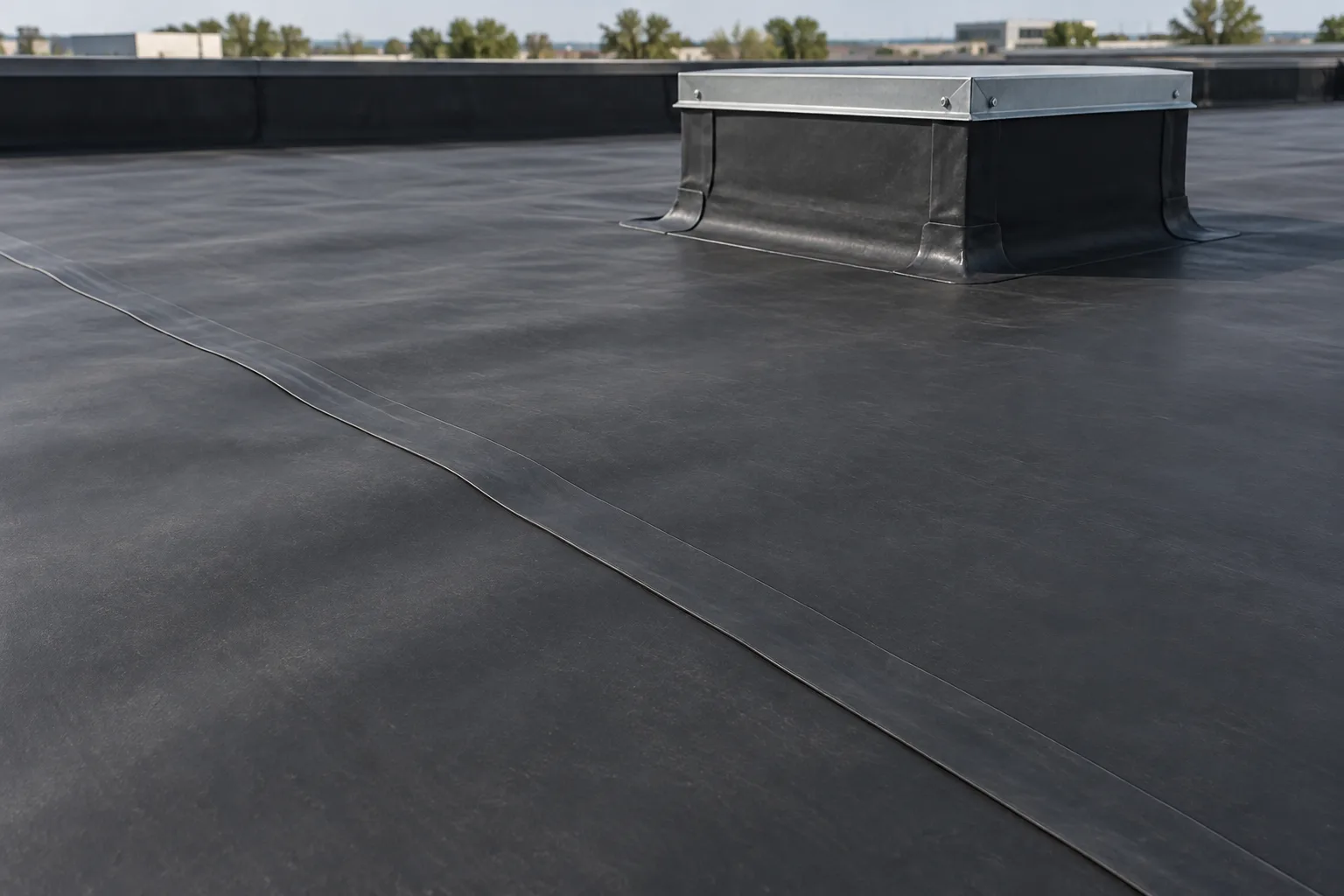
EPDM is a synthetic rubber membrane used on low-slope roofs. Broad sheets cover the field, while bonded seams and separate flashing pieces close the joints and interruptions. A sound-looking area of rubber does not settle the condition of the seams around it.
We examine the rubber surface, sheet overlaps, perimeter attachment and flashing around pipes, corners and equipment curbs. Open seam edges or a damaged corner require compatible preparation and repair materials. EPDM is not repaired by treating it like a hot-air-welded TPO membrane.
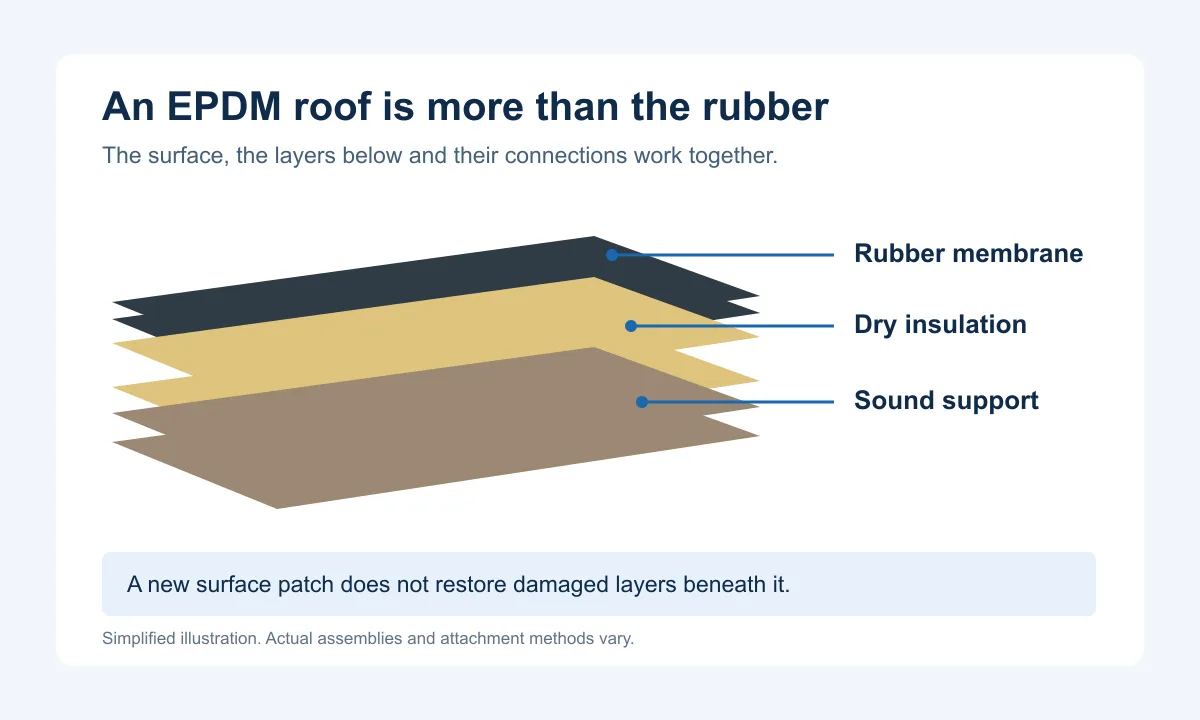
The connection must reach suitable existing material. Surface contamination, old patching products and deterioration can change the repair boundary. Insulation and supporting layers also matter: a new rubber patch cannot reverse moisture damage below it.
The roof has to remain connected where a flexible sheet meets a fixed opening or edge. Those details decide the repair method.
| Roof detail | What the work must resolve |
|---|---|
| A sheet overlap | Clean, suitable adjoining membrane and the correct EPDM seaming products are needed to restore the joint. |
| A curb or inside corner | Flashing must follow the change in shape without leaving an open corner or an unsupported connection. |
| A pipe or penetration | The flashing and termination must fit the opening and remain connected to the roof field. |
| A perimeter or wall edge | Membrane securement and the edge termination must work together rather than rely on surface sealant alone. |
| A patch beside an older repair | The condition and compatibility of retained material determine whether the old repair can stay. |
A defined defect in otherwise suitable membrane supports a local repair. The proposed work needs sound connections and suitable layers beneath it, with failed details addressed as part of the repair.
Recover means adding a new roofing assembly over an existing suitable roof. Existing moisture, deck condition, attachment and code determine whether retention is possible. It differs from coating the exposed rubber.
Widespread moisture, deteriorated support or membrane that no longer accepts reliable detail work can make replacement the more complete answer. Removal gives access to the layers and drainage needs the new assembly must address.
A new rooftop unit or a changed pipe layout creates a new roofing detail. It needs attention even when the rubber field remains serviceable.
A replacement unit should not leave damaged or incomplete flashing around its curb. The roofing detail and the equipment work need to meet at a defined boundary so the opening is closed as part of the project.
Repeated equipment access brings foot traffic to the same roof areas. Suitable walkways and an appropriate route protect the membrane where servicing occurs. A walkway does not repair an already damaged seam or puncture.
Abandoned openings, added equipment and previous repairs affect future work. Knowing which details remain in use helps distinguish a local repair from a replacement that should remove obsolete openings and rework the assembly.
The amount of rubber visible from above is only part of the project. The work around and below it changes the cost.
A field repair differs from rebuilding several corners, pipe flashings or wall terminations. Existing repair products and surface condition influence preparation and the amount of material that must be removed.
Dry, suitable retained layers require different work from replacing saturated insulation or repairing the deck. A new assembly also has to use attachment appropriate to the building and selected system.
Tear-off, disposal and changes needed to move water toward outlets affect replacement scope. A new membrane does not automatically correct a low area or a poorly connected drain.
Yes, when the existing rubber can accept a compatible repair and the supporting roof layers are suitable. The failed seam, puncture or flashing detail determines the method. Damage extending into wet insulation or weakened support widens the work.
No. EPDM is synthetic rubber; TPO roofing uses a different single-ply material and heat-welded seams. The repair products and joining methods need to match the roof rather than be substituted between systems.
Some aged single-ply roofs suit compatible restoration systems after preparation, adhesion testing and repairs. The existing rubber, previous products and underlying moisture determine eligibility. Roof coatings explains the work needed before coating is considered.
No. A local seam or flashing defect can leak while much of the roof remains serviceable. The surrounding membrane and underlying layers determine whether a local repair is enough. Several leaks or repeated patches need a broader examination rather than an automatic whole-roof verdict.
Request a free roof inspection. Tell us about the leak, aging seam or building change, and we will begin with the rubber roof and the connections it needs.
(405) 705-7117